AI for real estate development
Intelligence at every stage.
One cost structure under the whole development lifecycle, and a layer of intelligence on top — so every decision runs on today's numbers, not last month's.
Budget deviation forming
Structure is trending 3.8% over committed cost
Material shortfall ahead
Rebar runs out 12 days before the schedule needs it
14 of 16 cost lines on track
Refreshed with today's site and purchasing data
Illustrative example
The product
AI at work on a real project.
We use AI to improve the real estate development lifecycle — reading budget, schedule, purchasing and site data together, and turning them into decisions people can sign.
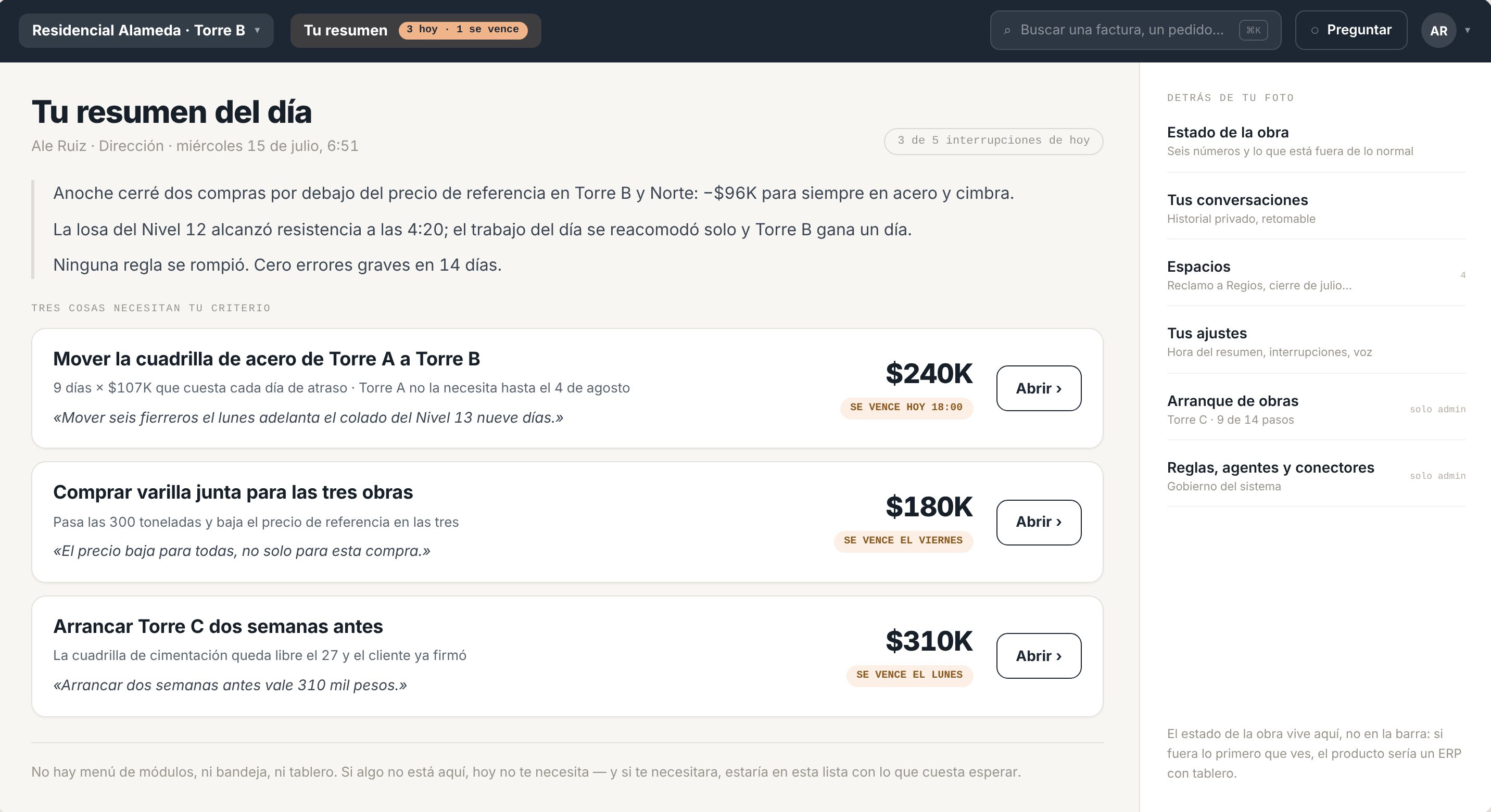
The home screen: every person lands on their day's summary — the few decisions that need their judgment, what each is worth, and when it's due.
The problem
The numbers arrive thirty days late.
Budget, procurement, site progress and actual cost live in separate systems and spreadsheets. So an overrun surfaces at month close — thirty days after the money was already committed.
The person deciding in the field should know today what is normally known a month from now.
What it does
One cost structure. Intelligence on top.
Vimani learns from how projects actually run, not from how they were planned.
Catch deviations before close
Budget deviations are flagged as they form — while there is still time to act, not a month after the fact.
Anticipate material shortfalls
The schedule is read against inventory and purchasing, so shortages are called out before they stop work on site.
Judgment from history
Years of operational history become judgment that applies to the project in front of you — from land to keys.
Built in the field
On live projects, not demos.
Two
active development companies — one in Mexico, one in the United States — as anchor customers from day one.
One week
from build to the field. What we ship this week is used on live projects the next.
80%
of the people on site using a module by week four — our bar for calling it done.
Results
What it means for ROI.
Faster delivery and less waste are not abstractions in development — every week of schedule is financing cost, and every rushed purchase is margin.
We froze the budget for a [24,800 m²] tower weeks earlier than we ever had, and overruns now surface the week they form — not at month close. That alone changed the ROI conversation.
Krea · Mexico
Rushed buying and material waste were our silent leak. Purchasing against a live reference price — with shortfalls flagged before they stop work — put [$X] back into one project's margin.
Head of Procurement · residential developer, CDMX
We delivered [PROJECT] [N weeks] early because decisions stopped waiting for month close. Early delivery is carry cost you never pay — it went straight to the project's return.
CEO · development group, Miami
Draft quotes — confirm wording and the bracketed figures with each person (Mauricio included) before this page goes public.
Know today what is normally known a month from now.
We are deploying with a small number of development teams. Tell us about your projects and we will show you Vimani on real numbers.
Request a demo